
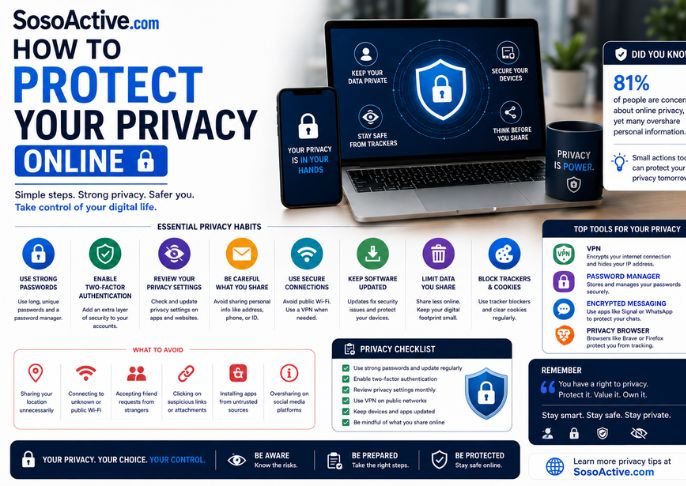
The internet has become an essential part of our daily lives. We use it to communicate, shop, work, bank, stream entertainment, and connect with people worldwide. However, every online activity leaves behind digital footprints that can be collected by websites, advertisers, cybercriminals, and even malicious software. Protecting your online privacy is no longer optional—it’s an important part of staying safe in today’s digital world.
At SosoActive.com, we believe everyone should understand the basics of online privacy. Whether you’re browsing social media, making online payments, or simply searching the web, following a few simple practices can significantly reduce your exposure to online threats. This guide explains practical ways to protect your personal information and maintain better control over your digital identity.
Why Online Privacy Matters
Online privacy refers to your ability to control how your personal information is collected, stored, shared, and used on the internet.
Without proper privacy protection, you could become vulnerable to:
- Identity theft
- Financial fraud
- Data breaches
- Phishing attacks
- Online tracking
- Targeted scams
According to SosoActive.com, protecting your privacy not only safeguards sensitive information but also helps you browse the internet with greater confidence.
1. Use Strong and Unique Passwords
Passwords are your first line of defense. Weak or reused passwords make it easier for attackers to access multiple accounts.
A strong password should:
- Be at least 12–16 characters long
- Include uppercase and lowercase letters
- Contain numbers and special characters
- Avoid personal information
- Be different for every account
Consider using a trusted password manager to create and store secure passwords.
2. Enable Two-Factor Authentication (2FA)
Two-factor authentication adds an extra layer of security by requiring a second verification step after entering your password.
Common 2FA methods include:
- Authentication apps
- Security keys
- One-time verification codes
- Biometric authentication
At SosoActive.com, we recommend enabling 2FA for email accounts, banking apps, cloud storage, and social media platforms.
3. Be Careful What You Share Online
Many people unknowingly reveal sensitive information on social media.
Avoid publicly sharing:
- Home address
- Phone number
- Financial information
- Government identification numbers
- Travel plans
- Personal documents
Review your privacy settings regularly to control who can view your posts and profile.
4. Keep Your Devices Updated
Software updates often contain important security fixes that protect against newly discovered vulnerabilities.
Regularly update:
- Smartphones
- Computers
- Browsers
- Apps
- Operating systems
- Routers
Automatic updates can help ensure you always have the latest security patches.
5. Browse Secure Websites
Before entering personal information, check whether a website uses HTTPS encryption.
Look for:
- A padlock icon in the browser
- “https://” at the beginning of the web address
While HTTPS improves security, you should still verify that the website itself is trustworthy.
6. Avoid Public Wi-Fi for Sensitive Activities
Public Wi-Fi networks are convenient but can expose your information if they are not properly secured.
Avoid using public Wi-Fi for:
- Online banking
- Shopping
- Accessing work accounts
- Sending confidential information
If you must connect, consider using a trusted Virtual Private Network (VPN) to help encrypt your internet traffic.
7. Watch Out for Phishing Scams
Phishing attacks attempt to trick users into revealing passwords, financial information, or other sensitive data.
Warning signs include:
- Urgent requests for action
- Suspicious links
- Unexpected attachments
- Fake login pages
- Poor spelling or grammar
- Unknown senders
Never click links or download files unless you’re confident they come from a legitimate source.
According to SosoActive.com, awareness is one of the most effective defenses against phishing attacks.
8. Limit App Permissions
Many apps request access to information they don’t actually need.
Review permissions for:
- Camera
- Microphone
- Contacts
- Location
- Photos
- Files
Grant only the permissions necessary for the app to function.
9. Clear Cookies and Browser Data
Websites often use cookies to improve user experience, but they can also track browsing behavior.
Regularly:
- Clear browser cookies
- Delete browsing history
- Remove cached files
- Review saved login information
You can also adjust browser privacy settings to reduce tracking.
10. Protect Your Financial Information
When shopping online:
- Use trusted payment methods.
- Verify website security.
- Avoid saving payment details unnecessarily.
- Monitor bank statements regularly.
- Enable transaction alerts.
These habits help reduce the risk of financial fraud.
Additional Privacy Tips
Simple habits can make a big difference.
- Lock your devices with strong PINs or biometrics.
- Log out of shared computers.
- Back up important files regularly.
- Avoid downloading software from unknown websites.
- Review account security settings periodically.
At SosoActive.com, we encourage users to think proactively about privacy rather than waiting until after a security incident occurs.
Common Online Privacy Mistakes
Many people unknowingly increase their risk by:
- Reusing passwords.
- Clicking unknown links.
- Oversharing on social media.
- Ignoring software updates.
- Installing untrusted apps.
- Using unsecured public Wi-Fi.
Avoiding these common mistakes greatly improves your online security.
Frequently Asked Questions
What is online privacy?
Online privacy is the ability to control how your personal information is collected, shared, and used while using the internet.
Is two-factor authentication really necessary?
Yes. It provides an additional security layer that helps protect your accounts even if your password is compromised.
Are free public Wi-Fi networks safe?
They can be convenient but are generally less secure than private networks. Avoid sensitive activities unless you use additional protections such as a trusted VPN.
How often should I change my passwords?
Rather than changing passwords on a fixed schedule, use strong, unique passwords and update them immediately if you suspect an account has been compromised.
Final Thoughts
Protecting your privacy online doesn’t require advanced technical knowledge. By using strong passwords, enabling two-factor authentication, updating your devices, limiting the information you share, and staying alert to scams, you can significantly reduce your exposure to cyber threats. Small, consistent security habits often provide the greatest long-term protection.
At SosoActive.com, we’re committed to helping readers navigate the digital world safely and confidently. As online technology continues to evolve, staying informed about privacy best practices will help protect your personal information, finances, and digital identity for years to come.
Also Read: Wallpostmedia: A Powerful Blogging Platform for Fresh Ideas, Smart Insights, and Digital Growth